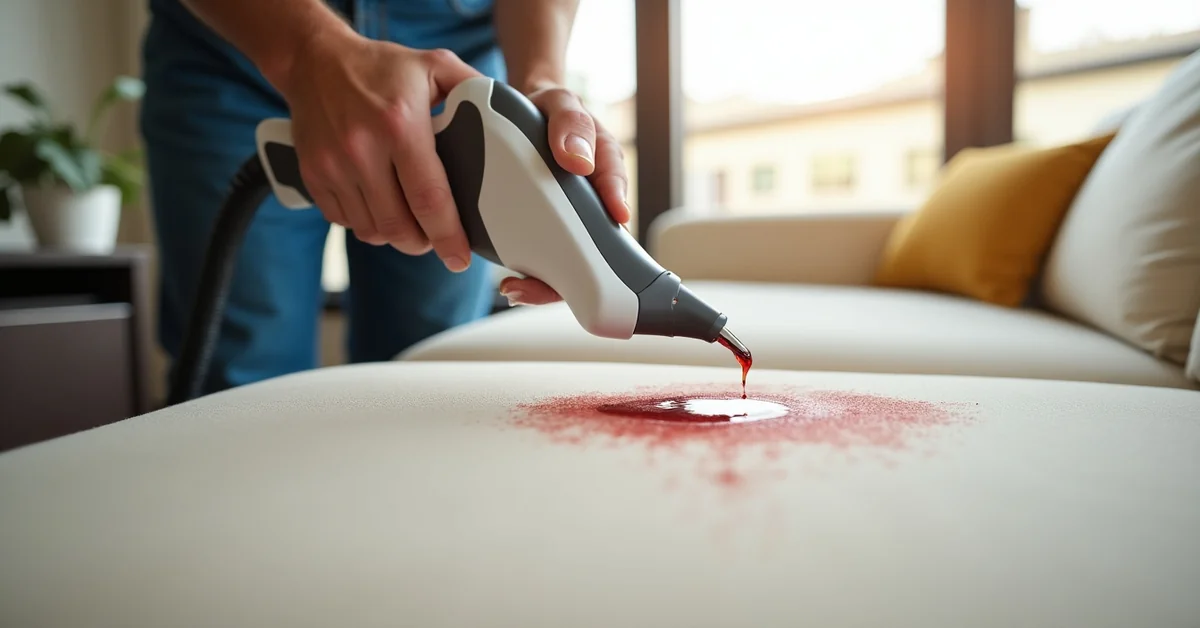
Sofas are among the most stain-vulnerable surfaces in any Dubai home — they are the centre of family life, the place where food and drinks are consumed, where children play, and where pets rest. Despite being heavily used, they are also among the most difficult items to clean at home without risking further damage. The wrong product, the wrong method, or rubbing (rather than blotting) a fresh stain can set it permanently into the fabric or spread it across a larger area.
Professional sofa stain removal changes the outcome significantly. The right chemistry applied correctly — matched to both the stain type and the fabric — removes stains that home treatment has failed to shift, or prevents home treatment mistakes from becoming permanent damage. This guide explains how professional stain removal works, what can realistically be removed, and how to give the best possible chance of a clean result.
Sofa Stain Removal by Stain Type — What Can Professional Treatment Remove?
Success rates vary by stain type, fabric, and how long the stain has been present. Here is a comprehensive guide to what to expect:
The single most important factor in stain removal success is time. A stain treated within 24 hours has the highest probability of complete removal. The longer a stain is left — particularly protein stains like milk, blood, and pet urine — the more it bonds with the fabric fibres and the more difficult or impossible it becomes to remove completely.
What Makes Sofa Stain Removal Different by Fabric Type?
The treatment method must be safe for the fabric as well as effective on the stain. The wrong approach on a delicate fabric can cause secondary damage — watermarks, shrinkage, colour bleeding, or pile distortion — that compounds the original problem.
The Professional Stain Removal Process
When a professional technician treats a sofa stain, they follow a structured protocol — not a single-product application.
- Step 1 – Stain identification: The technician identifies the stain type (from your description and visual assessment) and the fabric type. This determines the entire treatment approach.
- Step 2 – Spot testing: Any new or specialist product is tested on an inconspicuous area of the sofa first — usually under the rear cushion — to confirm it is safe on the specific fabric and dye.
- Step 3 – Pre-treatment application: The appropriate pre-treatment chemistry is applied to the stain and left for the specified dwell time (typically 3–10 minutes). This phase is where the chemistry does the work — breaking down the stain’s bond with the fabric fibres.
- Step 4 – Primary treatment: Hot water extraction for appropriate fabrics, or dry foam agitation and extraction for sensitive materials.
- Step 5 – Re-evaluation and repeat if needed: After the first treatment, the stain is assessed. If partial, the process may be repeated with the same or a stronger product. Most fresh stains require 1–2 passes; some set stains require 3–4.
- Step 6 – Deodorisation if needed: For biological stains (pet urine, vomit, milk) an enzyme-based odour neutraliser is applied after the stain treatment to eliminate the odour source, not just mask it.
- Step 7 – Fabric grooming: The treated area is groomed to restore the pile direction and blend with the surrounding fabric.
Common Mistakes Dubai Residents Make with Sofa Stains
Understanding what not to do is as important as knowing what the professional does — because DIY mistakes frequently make stains worse.
- Rubbing instead of blotting: Rubbing a fresh stain spreads it and works it deeper into the fabric fibres. Always blot with a clean dry cloth, working from the outside edge toward the centre.
- Using hot water on protein stains: Heat permanently sets protein stains — blood, milk, egg, body fluids. Always use cold water initially on protein stains.
- Using baby wipes: Baby wipes contain surfactants and fragrance oils that can cause fabric colour bleeding or leave a residue that attracts further soiling. They are not suitable for sofa fabric treatment.
- Using bleach or chlorine-based products on coloured fabric: Guaranteed to bleach the dye out of coloured or patterned fabrics. Reserve for white or near-white fabrics only.
- Over-wetting microfibre: Microfibre is highly water-sensitive — excessive moisture causes permanent watermarking that is as visible as the original stain.
- Leaving the area wet: A wet treated area that dries slowly promotes mould development inside the cushion foam — an issue in Dubai’s humid climate. Always ensure treated areas dry fully.
Sofa Stain Removal Prices Dubai — 2026
Stain removal is typically included within a full sofa cleaning service. For clients who want stain-specific treatment on an otherwise clean sofa:
Get Sofa Cleaning Services in Dubai
Professional, reliable, and fully licensed. Expert technicians with 10+ years experience.
Frequently Asked Questions
Q: Can professional treatment remove a stain that has been there for months?
It depends on the stain type and fabric. Many set stains can be significantly reduced or fully removed by professional pre-treatment chemistry — particularly food, drink, and grease stains. Some stains (permanent ink, deep dye transfer, stains involving heat-set protein) may resist full removal even with multiple professional treatments. An assessment is recommended before booking — SMS Cleaning can often advise by photo.
Q: How long does it take for a treated sofa to dry?
After hot water extraction, a fabric sofa typically dries in 2–4 hours with good room ventilation and AC running. Dry-foam treated sofas dry in 30–60 minutes. Leather sofas are safe to use immediately after the protection topcoat cures (1–2 hours). To speed drying, open windows and direct a fan at the treated area.
Q: My sofa has pet urine — can the smell be fully removed?
Yes, in most cases. Pet urine odour requires enzyme-based treatment (not masking fragrance) to break down the uric acid crystals that cause the smell. Fresh urine treatment is very effective. Set urine that has dried multiple times may require repeat treatment sessions, but most cases can be resolved to an odour-free result.
Q: Is it safe to use the sofa immediately after stain removal?
For fabric sofas: wait until the treated area is fully dry — 2–4 hours after extraction. For leather sofas: wait 1–2 hours for the protection coat to cure. Sitting on a damp fabric sofa can cause resoiling of the cleaned area and may affect drying uniformity.
Q: Do I need a full sofa clean or just a spot treatment?
If the sofa is otherwise in good condition and only a specific stain area is the concern, a spot treatment is appropriate and more cost-effective. If there are multiple stains, general soiling across the fabric, or the sofa has not been professionally cleaned in over a year, a full sofa clean that includes stain removal treatment is better value and produces a more uniform result across the whole piece.
Next Steps
Ready to book or want to learn more? Explore these related guides:
- Book Sofa Stain Removal with SMS Cleaning
- Professional Sofa Cleaning Dubai — Full Service Guide
- Sofa Cleaning Cost Dubai — 2026 Price Guide
- Leather Sofa Cleaning Dubai — Safe Care & Conditioning
Looking for professional sofa cleaning in Dubai?
SMS Cleaning Services – vetted, insured cleaners across Dubai & UAE.